
Revolutionizing Personal Care Packaging Solutions with Paper

The personal care industry demands packaging that balances functionality, aesthetics, and sustainability. Paper and fibre-based materials have emerged as key enablers in meeting these requirements. As a partner specialising in paper and fibre materials, Papironova connects application needs with suitable materials, international sourcing, and dependable commercial execution. This article explores how paper solutions are transforming personal care packaging, focusing on application requirements, material performance, converting behaviour, specifications, supply reliability, regulatory considerations, and commercial value.
Understanding Personal Care Packaging Solutions
Personal care packaging solutions must address a complex set of criteria. Packaging protects the product, ensures hygiene, facilitates ease of use, and supports brand identity. Additionally, regulatory compliance and sustainability considerations are increasingly important.
Paper and board materials offer versatility in this context. Their inherent properties can be tailored to meet specific application demands, such as barrier performance, printability, and mechanical strength. For example, multi-layered paperboard structures can provide moisture resistance and durability without resorting to plastic laminates.
From a converting perspective, paper materials must behave predictably during processes such as die-cutting, folding, gluing, and embossing. Consistency in these behaviours reduces waste and improves production efficiency. Selecting the right paper grade and fibre composition is therefore critical.
Supply reliability is another key factor. European businesses require partners who can source materials globally while ensuring consistent quality and timely delivery. Papironova’s expertise lies in aligning these supply chain capabilities with the technical demands of personal care packaging.
Material Performance and Specification Considerations
When specifying paper materials for personal care packaging, several performance attributes must be evaluated:
Barrier Properties: Protection against moisture, oxygen, and contaminants is essential. Coatings or laminations can enhance barrier performance but must be compatible with recycling streams.
Mechanical Strength: Resistance to compression, tearing, and puncture ensures product integrity during transport and handling.
Printability: High-quality graphics and text are vital for brand communication. Paper surfaces must support various printing technologies without compromising durability.
Converting Compatibility: Materials should maintain dimensional stability and adhesive compatibility during converting.
Regulatory Compliance: Materials must meet food contact and cosmetic packaging regulations applicable in Europe and other target markets.
Selecting materials based on these criteria requires a detailed understanding of fibre types, paper grades, and finishing options. For instance, virgin fibres may offer superior strength and purity, while recycled fibres contribute to sustainability goals but may require additional processing to meet hygiene standards.
Papironova’s role is to guide businesses through these technical considerations, ensuring that material choices align with both application needs and regulatory frameworks.
What are some examples of personal care products?
Personal care products encompass a wide range of items, each with unique packaging requirements. Examples include:
Facial tissues and wipes: Require soft, absorbent paper materials with gentle textures and hygienic packaging.
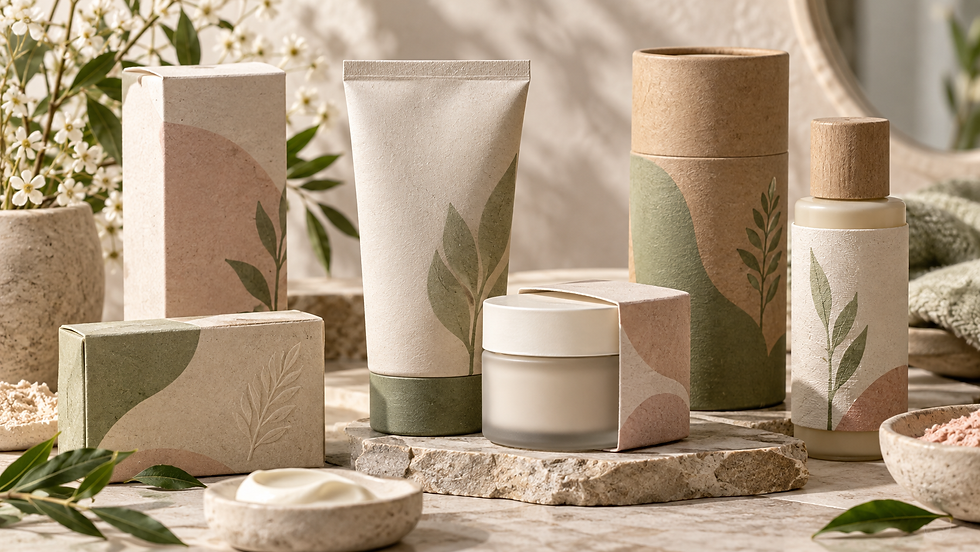
Cosmetic boxes: Often use rigid paperboard with high-quality printing and finishing to convey luxury and brand identity.
Shampoo and conditioner cartons: Need moisture-resistant paperboard that protects the product and supports shelf appeal.
Toothpaste tubes and outer cartons: Outer cartons must provide mechanical protection and clear product information.
Sanitary products: Packaging must ensure hygiene, discreetness, and ease of disposal, often combining paper with functional barriers.
Each product type demands a tailored approach to material selection and converting processes. For example, facial tissue packaging benefits from lightweight, soft paper with easy-open features, while cosmetic boxes require sturdier paperboard with precise die-cutting and embossing.
Supply Chain and Regulatory Challenges in Paper-Based Personal Care Packaging
The supply chain for paper materials in personal care packaging is complex. It involves sourcing from multiple international suppliers, managing lead times, and ensuring consistent quality. Fluctuations in raw material availability, transportation constraints, and regulatory changes can impact supply reliability.
European businesses must also navigate stringent regulations governing materials in contact with personal care products. Compliance with EU regulations such as REACH, the Packaging and Packaging Waste Directive, and specific food contact material standards is mandatory. Documentation and traceability of fibre sources and chemical treatments are critical components.
Papironova supports clients by providing detailed technical data, certifications, and sourcing transparency. This approach helps mitigate risks and ensures that materials meet both performance and regulatory expectations.
Practical Commercial Value of Paper Solutions in Personal Care Packaging
Beyond technical performance, paper solutions offer tangible commercial benefits:
Cost Efficiency: Optimised paper grades and converting processes can reduce material costs and production waste.
Sustainability Credentials: Using responsibly sourced fibres and recyclable materials supports corporate sustainability targets and consumer expectations.
Brand Differentiation: High-quality paper packaging enhances product presentation and consumer perception.
Supply Chain Resilience: Access to a broad network of suppliers reduces dependency on single sources and improves delivery reliability.
By focusing on materials selected around the application, businesses can achieve a balance between cost, performance, and sustainability. This strategic approach avoids over-specification and ensures that packaging solutions deliver practical value.
For those interested in exploring personal care paper solutions, Papironova offers expertise in matching application requirements with suitable materials and reliable sourcing.
Collaborating for Optimised Paper Packaging Solutions
The evolving demands of personal care packaging require a collaborative approach between material suppliers, converters, and manufacturers. Early engagement in the design and material selection process can identify potential challenges and opportunities.
Papironova encourages open dialogue to understand specific application requirements, converting capabilities, and commercial constraints. This partnership approach facilitates the development of tailored paper solutions that perform reliably and meet regulatory standards.
By leveraging technical knowledge and global sourcing networks, Papironova aims to be a dependable partner for European businesses seeking specialised paper and fibre materials for personal care packaging.
This overview highlights the critical role of paper solutions in advancing personal care packaging. Through precise material selection, attention to converting behaviour, and adherence to regulatory frameworks, paper-based packaging can meet the complex demands of this sector while delivering commercial and sustainability benefits.


Comments