
Evolving Trends in the Paper Industry - Trending Paper Industry Insights

The paper industry is undergoing significant transformation driven by evolving application requirements, material innovations, and shifting regulatory landscapes. As a partner specialising in paper and fibre materials, we understand the importance of aligning material selection with specific performance needs. This article explores the key trends shaping the paper industry today, focusing on technical and commercial aspects relevant to European businesses requiring specialised packaging paper and board.
Material Performance and Application-Driven Selection
One of the most notable trends in the paper industry is the increasing emphasis on selecting materials based on precise application requirements rather than generic specifications. Packaging converters and manufacturers are demanding papers and boards that deliver consistent performance under specific conditions such as moisture exposure, mechanical stress, or printing processes.
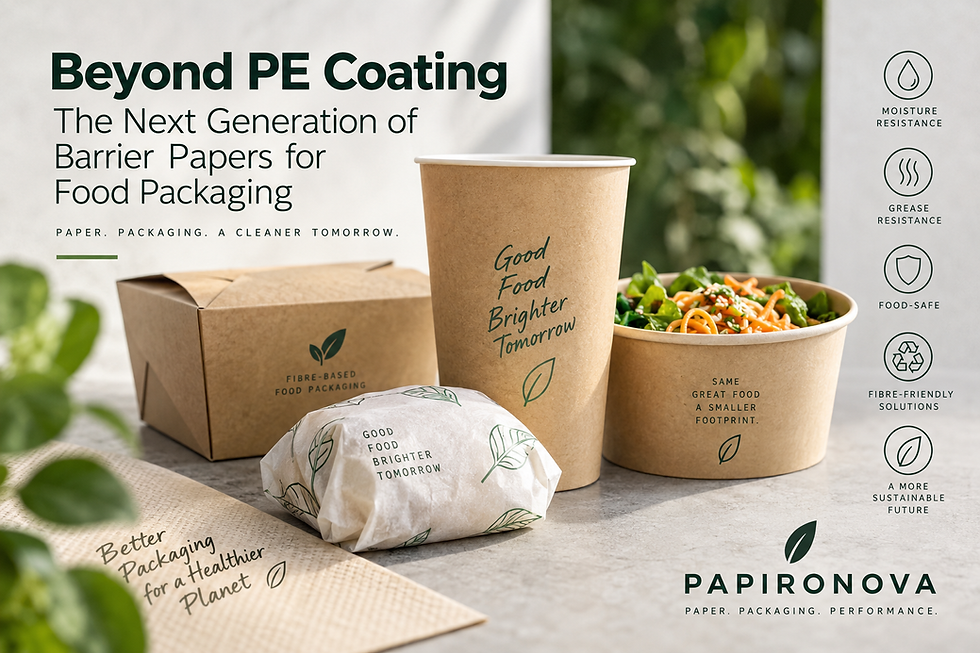
For example, barrier papers designed for food packaging must balance grease resistance with breathability, while folding boxboard used in luxury packaging requires excellent stiffness and printability. Understanding the fibre composition, coating technologies, and surface treatments is essential to meet these nuanced demands.
Key considerations include:
Fibre composition: Long fibres for strength, short fibres for smoothness.
Coating types: Clay, latex, or synthetic coatings for barrier properties.
Caliper and density: Impact on stiffness and converting behaviour.
Surface energy: Influences ink adhesion and print quality.
By focusing on these parameters, businesses can optimise material performance and reduce waste or production downtime.

Trending Paper Industry Insights: Supply Reliability and Sourcing Challenges
Supply chain reliability remains a critical concern in the paper industry, especially for specialised grades. Fluctuations in raw material availability, energy costs, and transportation logistics have heightened the need for robust sourcing strategies. European businesses increasingly seek partners who can provide transparent supply chains and consistent delivery schedules.
International sourcing plays a vital role in mitigating regional supply constraints. However, it requires thorough due diligence to ensure compliance with regulatory standards such as REACH and FSC certification. Additionally, understanding the lead times and potential bottlenecks in converting facilities is crucial for planning.
Recommendations for procurement professionals:
Establish multiple sourcing options to reduce dependency on single suppliers.
Verify certifications and regulatory compliance upfront.
Collaborate closely with suppliers to anticipate market shifts.
Monitor inventory levels with real-time data analytics.
These practices help maintain uninterrupted production and uphold quality standards.

Regulatory Considerations and Sustainability Metrics
Regulatory frameworks are increasingly influencing material choices in the paper industry. European regulations on chemical use, recyclability, and carbon footprint require manufacturers and converters to adapt their processes and material specifications.
Sustainability claims must be substantiated with verifiable data. For instance, papers certified by the Forest Stewardship Council (FSC) or Programme for the Endorsement of Forest Certification (PEFC) provide assurance of responsible sourcing. Life cycle assessments (LCA) are becoming standard tools to evaluate environmental impact from raw material extraction to end-of-life disposal.
Important regulatory and sustainability factors include:
Compliance with EU packaging waste directives.
Use of recycled fibres without compromising performance.
Reduction of volatile organic compounds (VOCs) in coatings.
Transparency in carbon emissions reporting.
By integrating these considerations, businesses can meet both legal requirements and customer expectations for sustainable packaging.
Converting Behaviour and Technical Challenges
The converting process presents unique challenges that influence material selection. Papers and boards must exhibit predictable behaviour during cutting, creasing, folding, and gluing to ensure efficient production and high-quality output.
Variability in moisture content, caliper uniformity, and surface smoothness can cause defects such as cracking, delamination, or poor adhesion. Understanding the interaction between paper properties and converting equipment is essential for optimising throughput and minimising waste.
Technical recommendations include:
Conducting pilot runs to assess material compatibility.
Specifying tight tolerances for moisture and thickness.
Selecting coatings that enhance glue adhesion without compromising flexibility.
Collaborating with converters to tailor materials for specific machinery.
This approach reduces operational risks and supports consistent product quality.
Commercial Value and Practical Application Insights
Beyond technical performance, the commercial value of paper materials lies in their ability to deliver cost-effective solutions tailored to application needs. This means balancing material cost with durability, printability, and supply reliability.
For example, a packaging company may choose a slightly higher-cost folding boxboard with superior stiffness to reduce damage rates during transport, ultimately lowering total supply chain costs. Similarly, selecting barrier papers with proven grease resistance can prevent product contamination and returns.
Engaging with a knowledgeable partner who understands these trade-offs and can source materials globally ensures that businesses receive practical, application-focused solutions rather than generic products.
For those interested in deeper analysis and ongoing developments, exploring paper industry blog insights can provide valuable perspectives and case studies.
Navigating Future Developments in Paper and Fibre Materials
Looking ahead, the paper industry will continue to evolve with innovations in fibre technology, digital printing compatibility, and circular economy integration. Emerging materials such as nanocellulose and bio-based coatings promise enhanced performance while addressing sustainability goals.
Staying informed about these trends and maintaining close collaboration with material partners will be essential for businesses aiming to remain competitive and responsive to market demands.
We encourage you to discuss your specific material or sourcing requirements with us to explore how tailored paper and fibre solutions can support your application needs reliably and efficiently.
This overview highlights the critical trends shaping the paper industry today, focusing on practical, application-driven insights. By prioritising material performance, supply reliability, regulatory compliance, and commercial value, businesses can navigate the complexities of specialised paper and board procurement with confidence.


Comments